Tampa facilities face extreme biopressure from the local subtropical climate, where 50-plus inches of annual rainfall and water-table saturation push pests toward commercial structures. In historical commercial spaces…
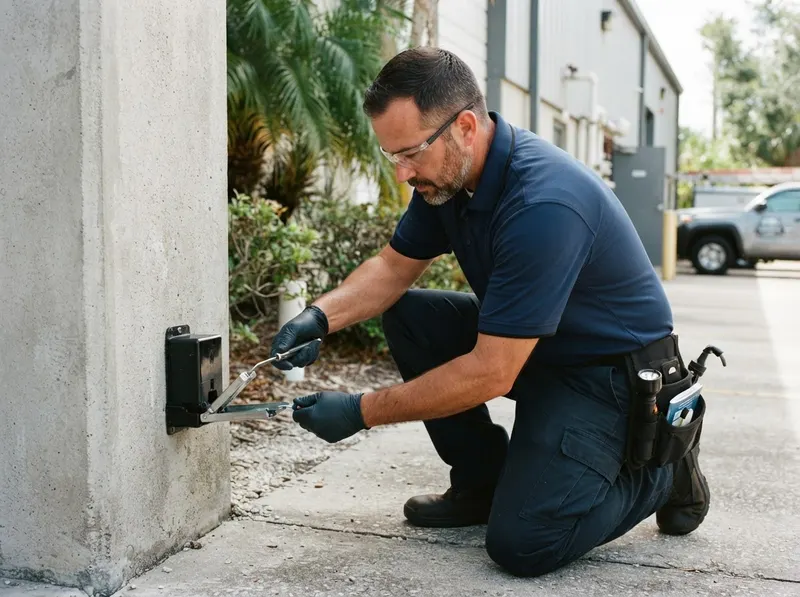
Tampa facilities face extreme biopressure from the local subtropical climate, where 50-plus inches of annual rainfall and water-table saturation push pests toward commercial structures. In historical commercial spaces across Ybor City and Tampa Heights, century-old brickwork and raised foundations create access points for roof rats and American cockroaches along utility lines. Modern high-density developments in the Channel District and medical suites near Davis Islands contend with shared walls and trash chutes, which allow German roaches to migrate between units within 48 hours if perimeter bait stations fail. Commercial pest management treats the building shell as a protective perimeter, sealing moisture entry points along concrete aprons and expansion joints before insect populations establish indoor nesting colonies.
Selecting the proper treatment cadence depends strictly on sanitation density and municipal compliance rules rather than arbitrary spray schedules. For retail storefronts along Palma Ceia or professional offices in Westchase, monthly exterior perimeter treatments and interior insect monitors isolate incoming pests without routine aerosol spraying inside customer areas. In contrast, commercial kitchens and food-handling operations near Hyde Park or the Tampa Riverwalk require bi-weekly inspections, enzymatic drain treatments, and pheromone traps to disrupt fly and cockroach reproduction cycles. The operational trade-off centers on preventative exterior exclusion versus reactive interior treatment: proactive barrier maintenance preserves tenant safety and avoids operational downtime, whereas skipping perimeter cycles forces disruption from intensive interior cleanouts.
Facility defense follows three methodical steps. 1. Technicians conduct a physical audit of the foundation, loading docks, plumbing chases, and HVAC roof penetrations to identify moisture traps and entry gaps wider than one-quarter inch. 2. Specialists deploy targeted non-repellent perimeter defenses and tamper-resistant exterior rodent stations, creating an unbroken protective envelope around the property footprint. 3. Technicians document chemical logs, regulatory compliance sheets, and physical trap captures for internal auditing, ensuring managers meet Florida Department of Agriculture and Consumer Services standards without binding multi-year contracts.
Every job gets a firm, written price after a free on-site visit.
Tell us about your commercial pest management job in Tampa and we'll send a clear, written quote, usually the same day.
 Gulf Finch Pest Control